jittr

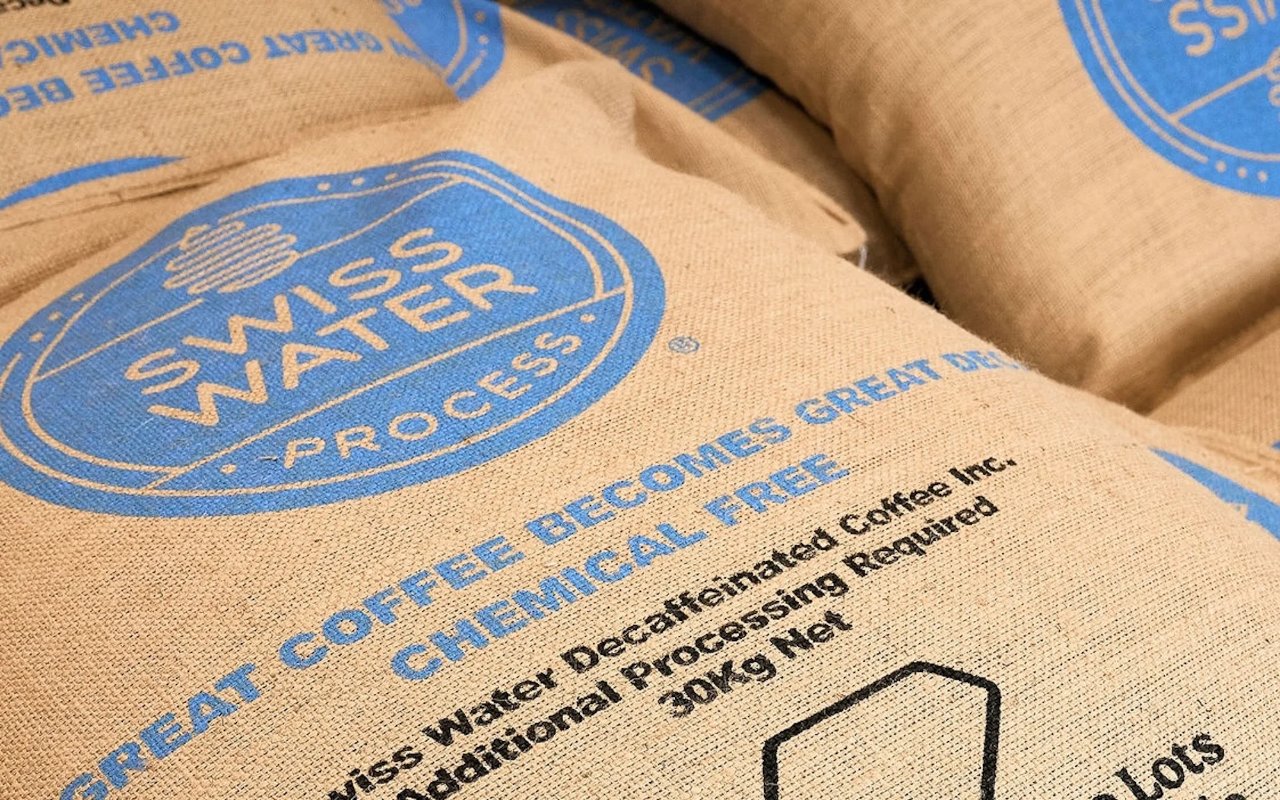
The Swiss Water Process takes caffeine out of green, unroasted coffee with water and activated carbon. Neither of the two solvents the FDA allows for decaffeination, methylene chloride and ethyl acetate, is involved. Swiss Water Decaffeinated Coffee, based in Delta, British Columbia, runs the process and says it was invented more than 40 years ago. The company opened a second production line in Delta to keep up with demand.
How the caffeine comes out
Water dissolves caffeine, and it also dissolves the sugars, acids and other compounds that give coffee its flavor. Soak green beans in plain water and you lose both.
The process gets around this with a liquid called Green Coffee Extract: water that already holds coffee's soluble solids, minus the caffeine. The plant cleans and pre-soaks the beans so they expand, then puts them in the extract. Because the extract already carries the other solids at about the same concentration as the beans, little of that material moves. Caffeine is the one compound the extract lacks, so caffeine diffuses out of the beans.
Activated carbon filters then capture the caffeine from the extract, and the filtered extract cycles back to the beans. Barista Magazine's walkthrough says a batch reaches 99.9% caffeine-free after about 10 hours and then goes to the dryer. The company makes its extract once and reuses it, and it regenerates the carbon between runs.
What 99.9% means in your cup
A label that says 99.9% caffeine-free describes the green beans leaving the plant. Decaf you buy at a café can still carry measurable caffeine. In a 2006 University of Florida study published in the Journal of Analytical Toxicology, researchers tested drip decaf from nine chains and local shops and found 8.6 to 13.9 mg of caffeine per 16-ounce cup. Starbucks decaf espresso measured 3 to 15.8 mg per shot. For comparison, the same researchers put a typical 8-ounce cup of regular drip at 85 mg.
That study didn't record which decaf method each café used. If you're cutting caffeine for medical reasons, ask the café what decaf it buys.
The solvent methods
The FDA permits methylene chloride as a decaf solvent under 21 CFR 173.255, with residue capped at 10 parts per million (0.001%) in decaffeinated roasted coffee and instant coffee. Ethyl acetate is permitted under 21 CFR 173.228, which sets no numeric residue limit and requires use "in accordance with current good manufacturing practice." Ethyl acetate occurs in some fruit and can be made by fermenting sugarcane, so roasters often sell it as "sugarcane process" decaf.
In December 2023, the Environmental Defense Fund, Breast Cancer Prevention Partners, the Center for Environmental Health, the Environmental Working Group and Lisa Lefferts petitioned the FDA to revoke its approval of methylene chloride and three other solvents. The petitioners argue the solvents cause cancer and can't remain approved under the Delaney Clause, which bars the FDA from approving food additives shown to cause cancer. The National Coffee Association opposes a ban and points to the existing 10 ppm limit. The FDA reopened public comments from May 28 to June 29, 2026, under docket FDA-2023-F-5684, and had not announced a decision as of Daily Coffee News' June 30 report.
The EPA banned methylene chloride for all consumer uses and most commercial uses in 2024. Food uses fall under the FDA, so that rule doesn't reach decaf, as the Center for Science in the Public Interest points out.
CO2 decaf
The supercritical CO2 method, developed by Kurt Zosel at the Max Planck Institute, runs carbon dioxide through green beans at about 300 atmospheres and 65°C (149°F). Under that pressure CO2 behaves as a solvent that dissolves caffeine, and most flavor compounds stay in the bean. It doesn't use either of the FDA-listed solvents.
Reading a decaf label
Bags from this process tend to say "Swiss Water Process" or "SWP," and ethyl acetate decaf may say "sugarcane process" or "EA." If the bag says "decaf" and nothing else, ask the roaster which method it buys.
Taste
We couldn't find a controlled tasting study that ran the same green coffee through each method, so claims that one method "tastes best" rest on cupping opinion. You can run a fair version yourself. Buy a Swiss Water decaf and a sugarcane decaf of the same origin, brew both the same way on the same morning, and have someone else pour them so you score each cup without knowing which is which.
Score your decaf side by side
Log both cups in Jittr with a score, flavor notes and a caffeine tag, and your history shows which decaf you'd buy again.
Download Jittr