jittr

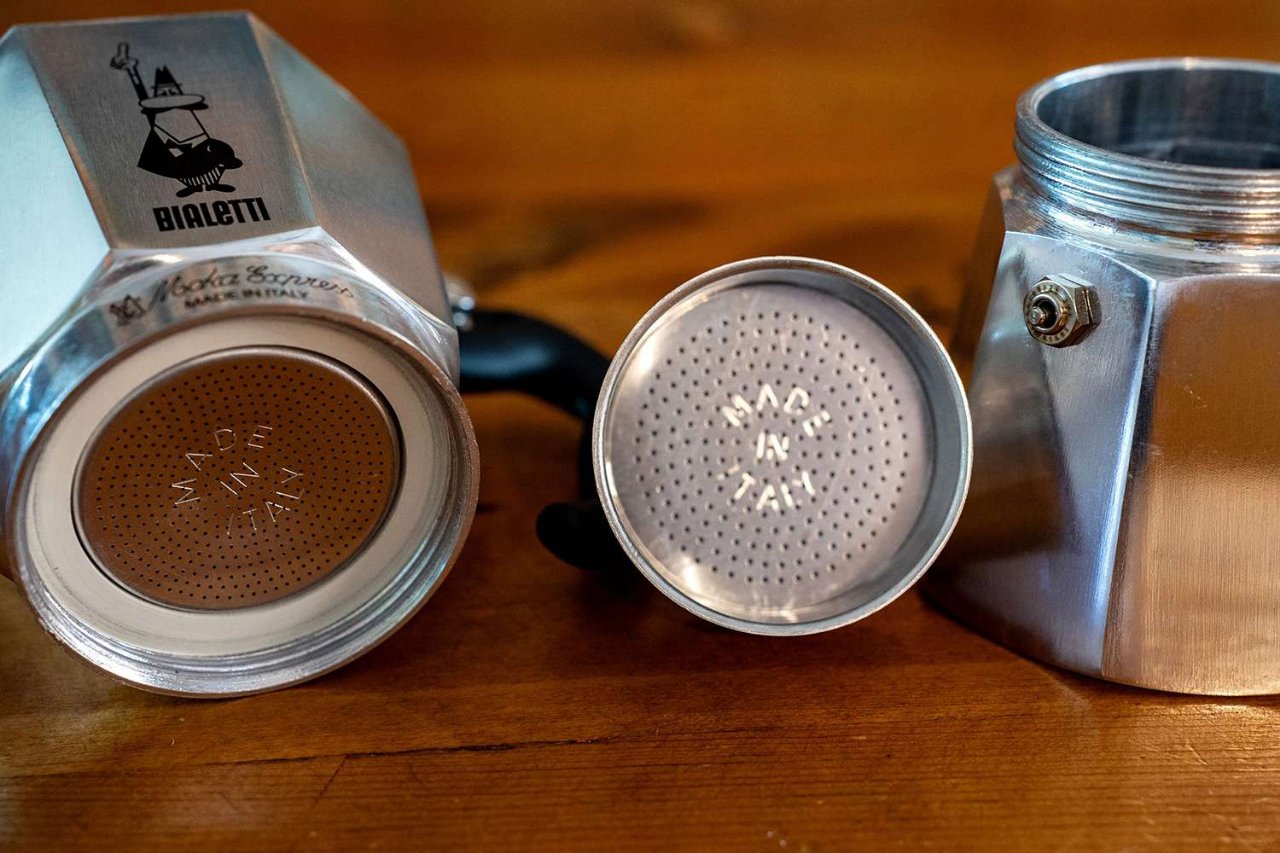
A Bialetti Moka Express makes strong stovetop coffee, not espresso, if you go by the standard definition. Bialetti first sold the Moka Express in 1933, and its eight-sided aluminum body has stayed close to the original.
The espresso definition
The Specialty Coffee Association's heritage definition of espresso describes 7 to 9 grams of coffee, water forced through at 9 to 10 atmospheres of pressure, a brew time of 20 to 30 seconds and 25 to 35 ml in the cup. Pressure is the part a moka pot can't match.
How a moka pot pushes water
The moka's base is a sealed chamber holding water and some air. As the burner heats it, the air expands and the water's vapor pressure rises, and together they push water up through the funnel, the bed of grounds and into the top chamber. Researchers at the University of Trieste and illycaffè measured the process in 2009 and found that extraction starts at lower temperatures than the common belief that water has to boil first. How much dry air sits in the base affects when it starts.
Steam tables show why the pressure stays low. Water's vapor pressure reaches about 1.5 atmospheres at 111°C. Getting to 9 atmospheres would take water at about 175°C. Since extraction in a moka starts below boiling, the pot runs at a fraction of espresso pressure, and a standard pot produces little or no crema. Bialetti's Brikka model adds a weighted valve meant to raise pressure and produce some foam.
What to call it
"Stovetop espresso" is the common American label for moka coffee, and it's where the confusion starts. If you order espresso at a café, you'll get the 9-bar version.
The difference shows up in milk drinks. Café latte recipes are built around espresso's concentration, so the same volume of moka coffee in the same amount of milk tastes weaker. Use less milk or brew a stronger pot.
Aluminum, induction and cleaning
Classic moka pots are aluminum, and induction cooktops need a magnetic base, so aluminum pots don't work on induction. Stainless steel moka pots do, and Bialetti sells an induction model with a steel base.
A 2017 study in Environmental Sciences Europe measured aluminum in coffee from aluminum moka pots. Release was highest on the first brew and dropped over the next four as the inside surface passivated. Washing the pot in a dishwasher raised the level again on the following brew. Even in that worst case, the authors calculated that an adult drinking an average amount of coffee would take in about 4% of the tolerable weekly intake, and they called exposure from properly used pots negligible. Manufacturers advise against the dishwasher. Rinse with water and dry the parts apart.
Brewing tips
Fill the base with water just off the boil, to just below the valve. Starting hot shortens the time the grounds sit on the burner before water reaches them.
Fill the basket level without tamping, screw the pot together with a towel since the base will be hot, and set it on medium heat with the lid open. Take it off the heat when the stream turns pale and starts to sputter. Running it until the base is dry pushes steam through spent grounds.
Score your moka next to your café espresso
Log both in Jittr tagged by brew method, and compare the scores side by side.
Download Jittr