jittr

To rate coffee well, taste it the same way every time and write down two things on their own lines: what you taste, and how much you like it. Professional tasters do this at a cupping table with a fixed recipe and a shared vocabulary for flavor. You can copy the method at home with a scale, a kettle and a spoon. Roast level and growing region shape what you'll find in the cup, though a farm's processing method can override what a region is known for.
Is there a sommelier for coffee?
The closest thing is the Q Grader, a license for coffee tasters. Since October 2025 the Specialty Coffee Association runs it.
The Coffee Quality Institute created the program about 20 years ago. Under a new partnership, the SCA took over the program on October 1, 2025 and calls it the Evolved Q Grader. The course runs six days, two on physical grading of green coffee and four on tasting, and it's built on the SCA's new Coffee Value Assessment. Existing Q licenses stay valid until the expiration date on the certificate.
The older exam was long. In 2016, KQED reported that candidates sat 20 tests over three days, 19 of them sensory, and that about 3,500 people held the license worldwide.
You don't need the license to taste well. The part worth borrowing is the method.
How professionals score coffee
Pros score coffee out of 100, and 80 marks specialty grade. Competition winners land in the high 80s and 90s.
The Coffee Quality Institute certifies green coffee as Q Coffee when it reaches a cup score of 80 or more. In 2024 the SCA replaced its 2004 tasting protocol and form with two separate assessments. The descriptive assessment records what's in the cup and how strong each attribute is. The affective assessment records how much the taster rates the quality.
On the descriptive form, tasters tick descriptors from a set list for aroma, flavor and mouthfeel, and rank intensity for those plus sweetness and acidity. Roukiat Delrue, quoted in the SCA's write-up, said the boxes steer tasters away from notes like "the raspberries that grew in my grandmother's garden" and toward "fruity" and "berry."
The Cup of Excellence competition shows how far up the scale the best coffees go. Under its rules, each coffee goes through six rounds of tasting. A national jury cups the first three, and samples need 86 or more to advance. An international jury joins for the final rounds, and coffees scoring 87 or more go to an online auction.
On Jittr you score from 1 to 10. Borrow the SCA's split: tag the flavors first, then give the number for how much you liked the cup.
How to cup coffee at home
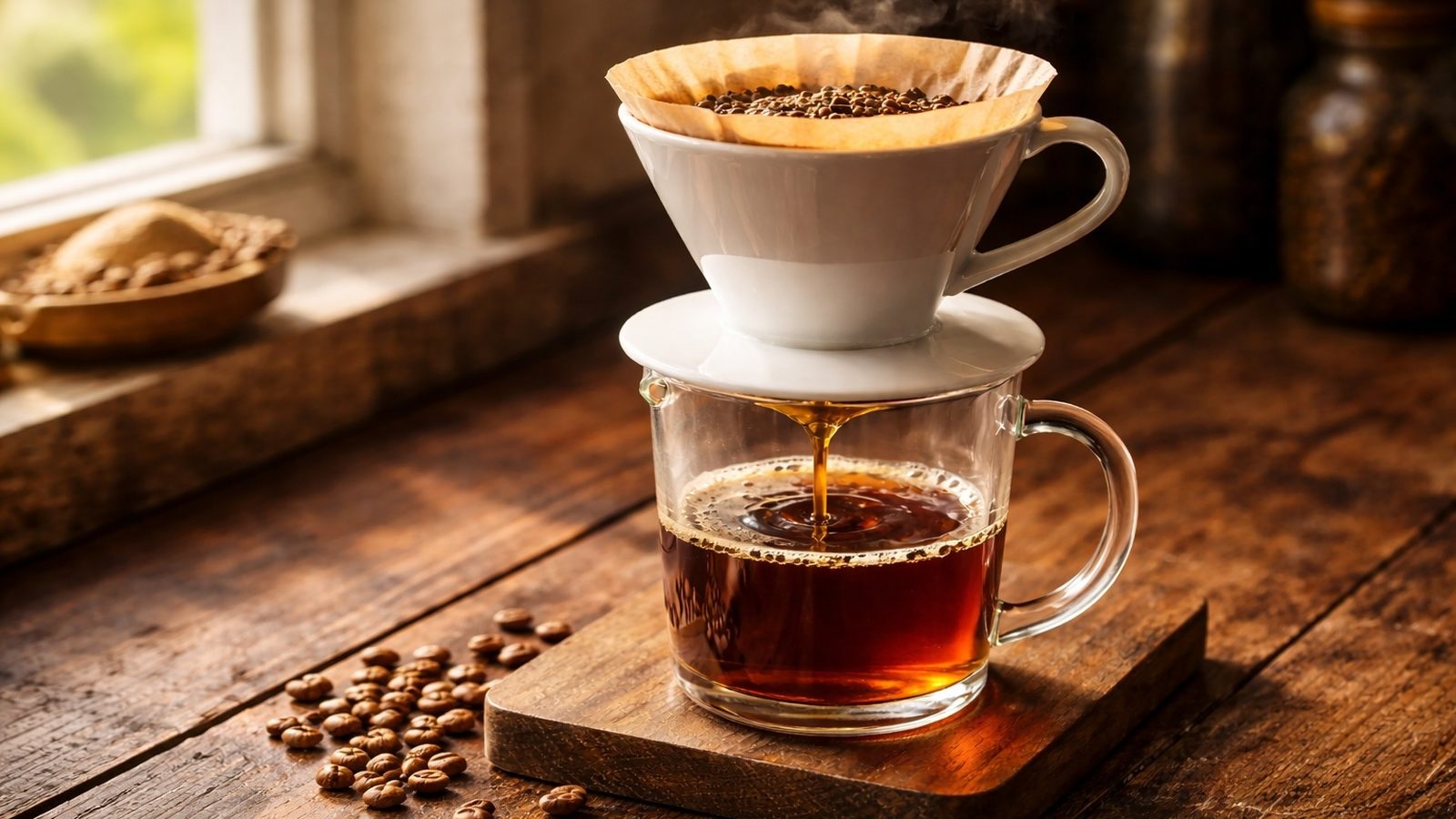
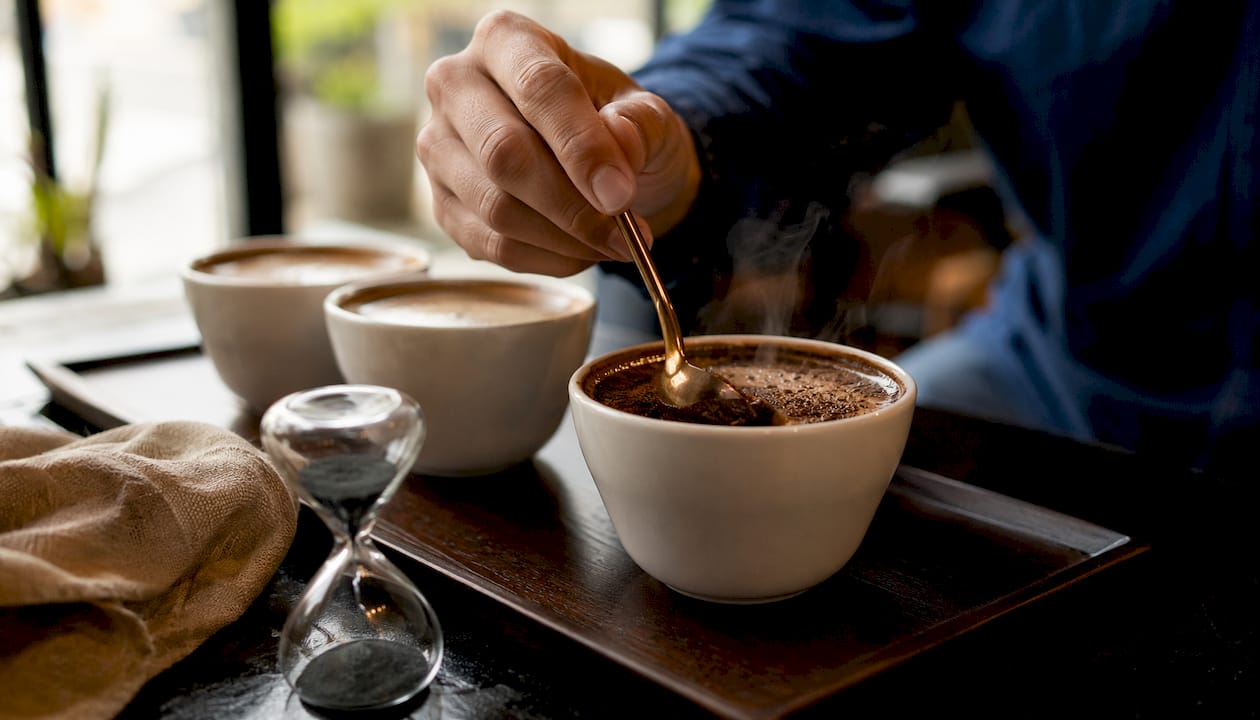
Cupping takes the brewer out of the test, so you taste the beans. You need a scale, a kettle, a few glasses and a soup spoon.
Royal Coffee's protocol sheet lists the SCA standard:
- 8.25 g of coffee per 150 ml of water, about 1 to 18
- A grind a little coarser than drip
- Water at 200°F, give or take 2°F
- 4 minutes of steeping before you break the crust
- Tasting at about 170°F, often 10 to 15 minutes after the pour
Weigh the coffee into each glass, grind it, and smell the dry grounds. Pour the water and start a timer. At 4 minutes, push the crust of grounds back with the spoon and smell the steam as it comes up. Skim off the foam, rinse the spoon, and wait. When the coffee has cooled, slurp it from the spoon so it spreads across your mouth.
Pros use five cups per coffee to catch a bad bean. Two or three work at home. Cup two coffees side by side so you have something to compare.
Finding words for what you taste
Start broad and narrow down. "Fruity" is a fine first note, and "blackberry" can come later.
The SCA and World Coffee Research publish the Coffee Taster's Flavor Wheel, built on WCR's Sensory Lexicon. Kansas State University's Sensory Analysis Center developed the lexicon, which defines 110 flavor, aroma and texture attributes and gives a reference for each. The wheel redesign based on it was the first in 20 years. Read the wheel from the center out: pick the broad family, then move to the outer ring if you can name something more specific.
What light, medium and dark roasts taste like
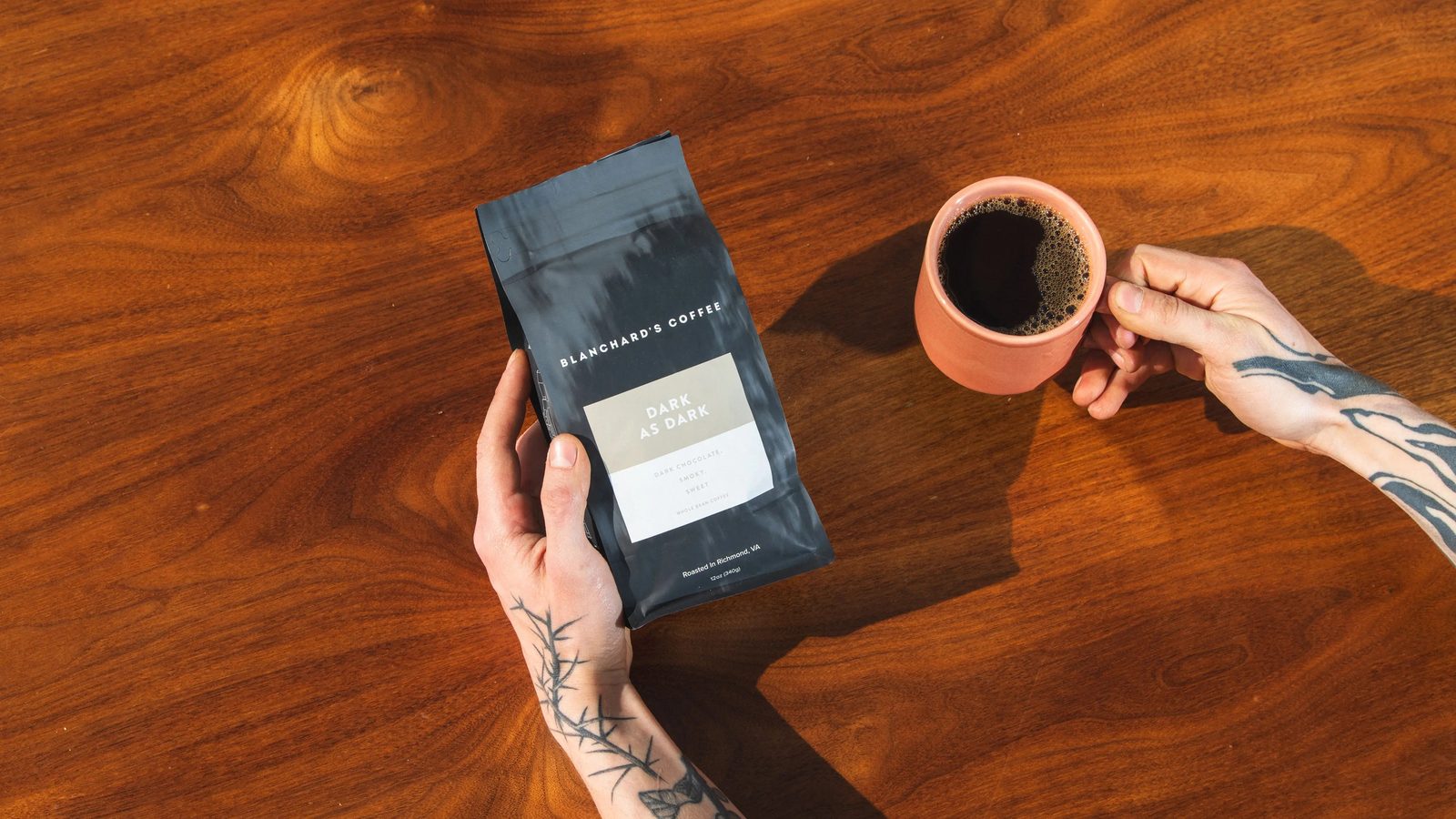
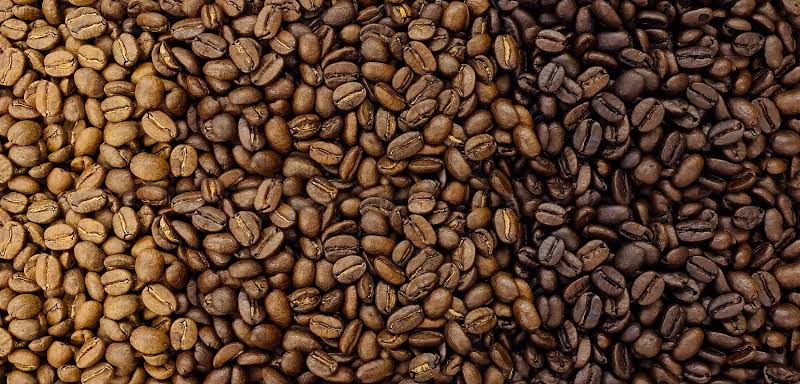
Light roasts keep more of the acids that make coffee taste bright. Medium roasts lean toward cocoa. Dark roasts taste roasty, smoky and bitter.
A 2020 review in the journal Beverages by Daniel Seninde and Edgar Chambers IV at Kansas State pulled together the research on coffee flavor. Dark-roast brews scored higher for smoky, ashy, woody, roasted and acrid flavors and for bitterness. Medium-roast brews scored higher for cocoa. Chlorogenic acids, which add acidity, bitterness and astringency, drop to about half their green-bean level by a medium roast.
Roast doesn't work the same on every bean. In a 2010 Kansas State study by Natnicha Bhumiratana, Koushik Adhikari and Edgar Chambers IV, a Hawaiian Kona coffee smelled sweetest roasted dark, while the two other coffees tested smelled sweeter at a light roast.
Samples for this kind of tasting are roasted light, per the SCA standard. When a competition jury lists fruit and flower notes, they're describing light roasts. If a coffee roasted dark tastes only of roast, try the same coffee roasted lighter before you write off the origin.
What different regions taste like
Region gives you a first guess, and processing and variety can change it. Competition results show both.
Ethiopia
The Seninde review cites research that found Ethiopian coffee stood out for monoterpenes, compounds with a citrus-like aroma. All five top-ranked lots at the 2024 Ethiopia Cup of Excellence came from Sidama and were natural processed, meaning the coffee dried inside the fruit. The jury described the third-place lot, from Bukto, with grape, plum, blackberry, dark chocolate and black tea, and called its acidity juicy.
Kenya
SL28, a variety selected in 1935 at the Scott Agricultural Laboratories in Kenya, grows in Kenya, Malawi, Uganda and Zimbabwe. World Coffee Research's variety catalog credits it with "very good cup quality potential" and doesn't list flavor notes.
Brazil
In the same review, ground Brazilian coffee carried more pyrazines than coffee from Ethiopia or Guatemala. Pyrazines are the compounds behind roasted, nutty aromas. Brazil's top competition coffees break from that pattern. At Brazil's 2024 competition, an anaerobic-fermented lot from Cerrado Mineiro won at 93.14. A natural from Mantiqueira de Minas scored 92.32, and its jury notes included hibiscus, nectarine, mango, grape and black currant.
Indonesia
Indonesian coffee is often wet hulled, a method that strips the parchment while the bean is still moist. None of the top three lots at Indonesia's 2023 competition was wet hulled. The runner-up, from Flores, was dry hulled, and the jury described it with chocolate, brown sugar, mandarin orange and roasted almond.
Hawaii
Kona coffee grows on the Big Island of Hawaii, and it's the bean that smelled sweetest roasted dark in the Kansas State study.
We didn't find peer-reviewed tasting data for every origin. The regional notes above come from chemistry studies and from what competition juries recorded for their top lots, which are the best coffees from each country.
Keep the variables with the score
Write the origin, process and roast next to every score. After a dozen cups, you can check which of the three lines up with your scores. That tells you what to look for on your next bag.
Rate it like a cupper
Score each coffee in Jittr from 1 to 10, tag the flavors and roast level, and note the origin in the comments. Your history shows which regions and roasts you score highest.
Download Jittr