jittr

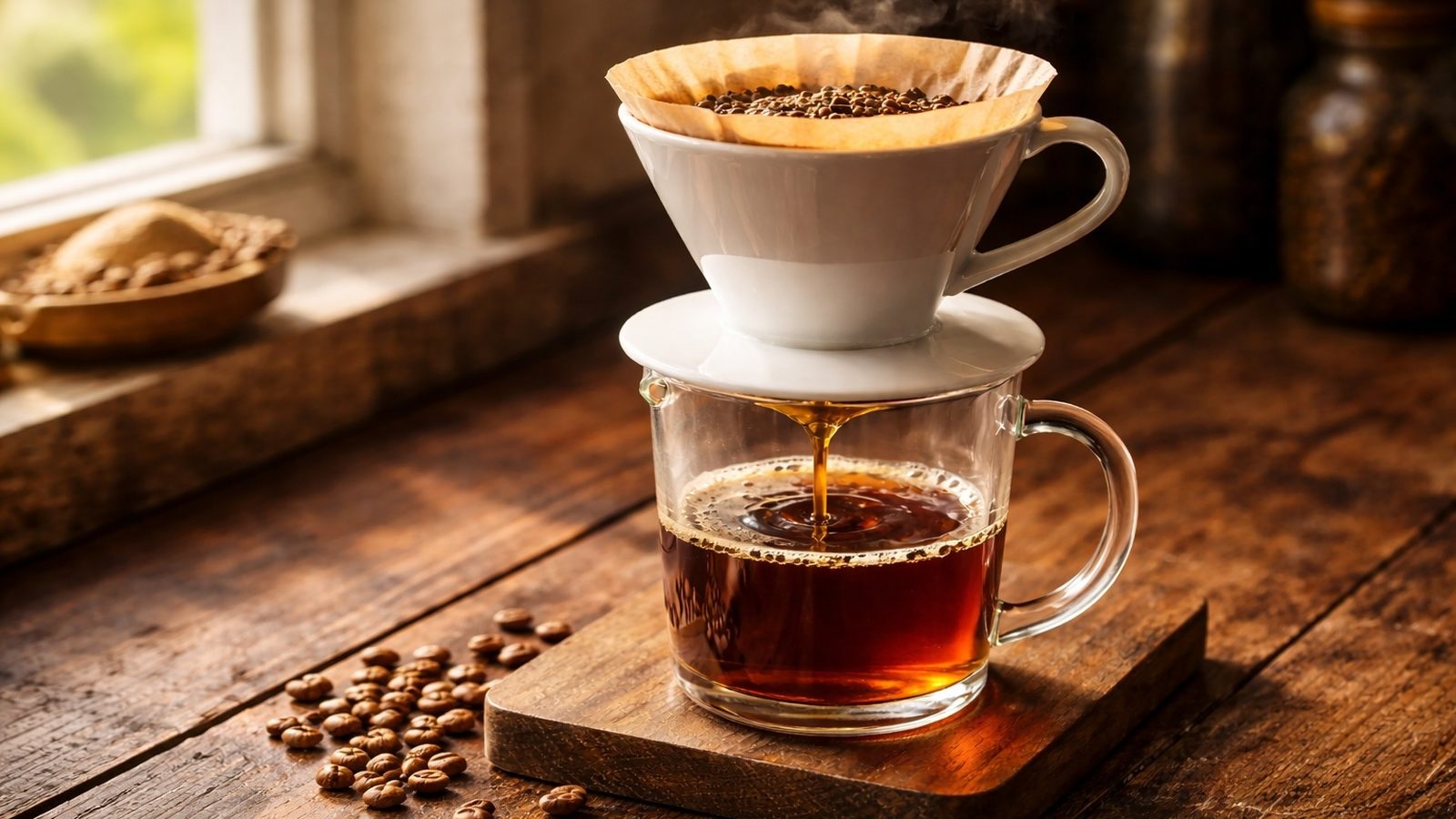
Brew a light roast for the flavor you want from it. For the brightest, most fruit-forward cup, use a cone pour-over or a Chemex. For a sweeter, more even cup that takes less skill, use an immersion dripper or an AeroPress. For lattes, pull espresso a little longer than usual. For a floral, smooth iced coffee, make cold brew. Light roasts keep more of the green bean's acids, and a sour cup means the brew needs more extraction: grind finer, use hotter water or brew longer. Use the picker below to match a brewer to your taste, cup count, effort and time, then read on for why each one works.
brewer picker
Answer four questions and get a brewer with a starting recipe for light roast.
- Cone pour-over: The brightest cup, one or two mugs at a time
- Chemex: A clear, tea-like cup for a few people
- Immersion dripper: Sweet and even, no pouring skill needed
- AeroPress: Sweet, full cups in about two minutes
- Espresso: Fruity shots and sweet lattes
- Drip machine: Clean cups with no technique
- Cold brew: Floral and smooth over ice, made a day ahead
What changes when coffee is roasted light
A light roast keeps more of the acids that make coffee taste bright, and the beans are less porous than dark ones. Hot water and enough contact time bring out the sweetness alongside the acidity.
In a 2024 study in Scientific Reports, researchers at Berry College and Drexel University roasted two Ethiopian coffees to five levels and measured the beans under a microscope. Porosity in the washed coffee climbed from 13.6% in the green bean to 45.8% at the darkest roast, so lighter beans had fewer open spaces for water to get into. Chlorogenic acids, which add acidity and bitterness, were highest at the light end and fell as the roast got darker. Caffeine in the cup peaked in medium roasts that lost about 14 to 16% of their weight, and dark roasts gave less caffeine than light and medium roasts brewed the same way.
A 2020 review in the journal Beverages by Daniel Seninde and Edgar Chambers IV at Kansas State found that chlorogenic acids drop to about half their green-bean level by a medium roast. Roast doesn't change every coffee the same way. In a 2010 Kansas State study, two of the three coffees tested smelled sweeter at a light roast.
For your morning cup, lighter beans give you more acidity to balance. Water just off the boil, a fine enough grind and a full brew time pull out the sugars that round it off.
Cone pour-over: for the brightest cup
If you buy light coffee for its fruit and flower notes, brew it in a cone pour-over such as a Hario V60.
Water runs through a thin paper filter in a few minutes. The paper holds back oils and fine particles, and the cup tastes clean enough that acidity and aroma stand out.
Use 15 g of medium-fine coffee and 250 g of water at 94 to 96°C (201 to 205°F). Rinse the paper first. Pour 45 g of water and wait 40 seconds while the grounds bubble, then pour the rest in small circles. Aim to finish between 2:30 and 3:30. Your pouring changes the cup, so expect a few tries before you can repeat a good one.
Chemex: for a clear cup for two to four
For more than one mug, use a Chemex. Its thick paper filter gives a clear, tea-like cup.
Use 40 g of medium-coarse coffee and 640 g of water at the same temperature. Rinse the filter and pour out the rinse water, bloom with 80 g of water for 45 seconds, then pour in stages. The thick paper slows the drain, so if a brew runs past 5 minutes, grind coarser next time.
Immersion dripper and AeroPress: for sweetness with less skill
If you want a sweet, balanced cup without learning to pour, steep the coffee.
In an immersion dripper such as the Clever Dripper, every ground sits in the water for the same time, so the whole bed extracts at the same rate. Use 20 g of medium-ground coffee and 320 g of water at 95°C (203°F). Stir, cover, steep for 2:30, then set the dripper on your mug to drain.
An AeroPress does the same job for one mug in about two minutes. Use 15 g of medium-fine coffee and 230 g of water just off the boil. Stir for 10 seconds, steep for 2 minutes and press. The stir and the press help a light roast give up its sweetness in a short brew.
Espresso: for juicy shots and sweet lattes
Light beans make a bright, fruity shot. Pull it longer than the usual 1:2 ratio to tame the acidity.
Start with 18 g of fine-ground coffee and pull 40 to 45 g into the cup in 27 to 35 seconds, with the machine at 93 to 95°C (199 to 203°F) if you can set it. If the shot tastes sour, grind finer or let it run longer. If it tastes bitter, stop it sooner. Expect to pull a few extra shots while you dial it in.
Cold brew: for a floral, smooth iced coffee
Cold brew keeps the floral side of light coffee.
In a 2022 study in the journal Foods, Mackenzie Batali and colleagues at the UC Davis Coffee Center brewed coffees at light, medium and dark roasts, both cold and hot. The cold brews scored higher for floral flavor at every roast level, and the hot brews scored higher for sourness and bitterness.
Stir 100 g of coarse coffee into 1 liter of cold water and refrigerate for 14 to 16 hours. Strain through a paper filter and cut it 1:1 with water before you taste it.
Use water near boiling
Start light roasts with water at 94 to 96°C (201 to 205°F), or just off the boil.
The Specialty Coffee Association's Golden Cup standard sets 92°C (198°F) as the minimum. A 2020 UC Davis study found that drip coffee brewed at 87, 90 and 93°C tasted about the same once grind and time were adjusted to match strength and extraction. Hot water speeds extraction. With light beans, that speed helps you reach sweetness before the brew runs long. Check that a drip machine reaches 92°C before you buy one for light beans.
Fixing coffee that tastes sour
A sour, thin cup means the water didn't dissolve enough coffee. Change one thing at a time:
- Grind a step finer.
- Use water just off the boil.
- Brew a little longer, or stir the grounds once during the brew.
- Use a little more coffee for the same water.
Light beans also hold their aroma at room temperature better than dark ones. At Penn State, Andrew Cotter and Helene Hopfer stored six roasts for nine weeks, frozen or at room temperature. Light roasts showed no large differences in smell across fresh, frozen and room-temperature samples, and the chemical tests agreed.
Track what your beans taste like
Log each cup in Jittr with the brew method, flavor notes and a score. Your ratings show which brewer brings out the fruit in the beans you buy.
Download Jittr