jittr

Most American menus stop at vanilla, caramel and pumpkin spice. Coffee drinkers in other places put pandan leaf, purple yam, egg yolk, sesame and saffron in the cup. Some of these are lattes in the café sense, espresso and steamed milk. A few are older coffees whose spices have since moved into lattes. Use the finder below to match one to what you like, then read where each comes from and how to try it.
latte flavor finder
Pick the flavors you like and how far from your usual order you want to go.
- Sweet and creamy: Spanish latte, Vietnamese egg coffee
- Nutty and toasty: ube latte, black sesame latte
- Herbal and floral: pandan latte, gahwa with cardamom and saffron
- Warm spice: café de olla, café Touba
Pandan latte: Southeast Asia's green vanilla
Pandan tastes like vanilla with a grassy, toasted-rice edge, and it turns the milk pale green.
Pandan is a tropical plant with long, blade-shaped leaves, and South and Southeast Asian cooks have used it for generations in rice, curries, puddings and cakes. In a March 2026 Perfect Daily Grind piece, Panther Coffee's Mavis Pangantihon compares it to vanilla with a botanical greenness close to matcha's, plus a toasted-rice note. Her buko pandan latte pairs espresso with coconut milk, and she calls pandan the "aromatic glue" between the coffee and the milk. She tested extracts and settled on a syrup made from pandan powder, because the extract tasted off and gave an unnatural color. Fresh leaves work too, but outside Asia you mostly find them at Asian grocery stores, which is also the place to buy pandan powder or paste for a home version.
Spanish latte and café bombón: condensed milk, two ways
Both drinks sweeten coffee with condensed milk in place of sugar, which makes them thick and caramel-sweet.
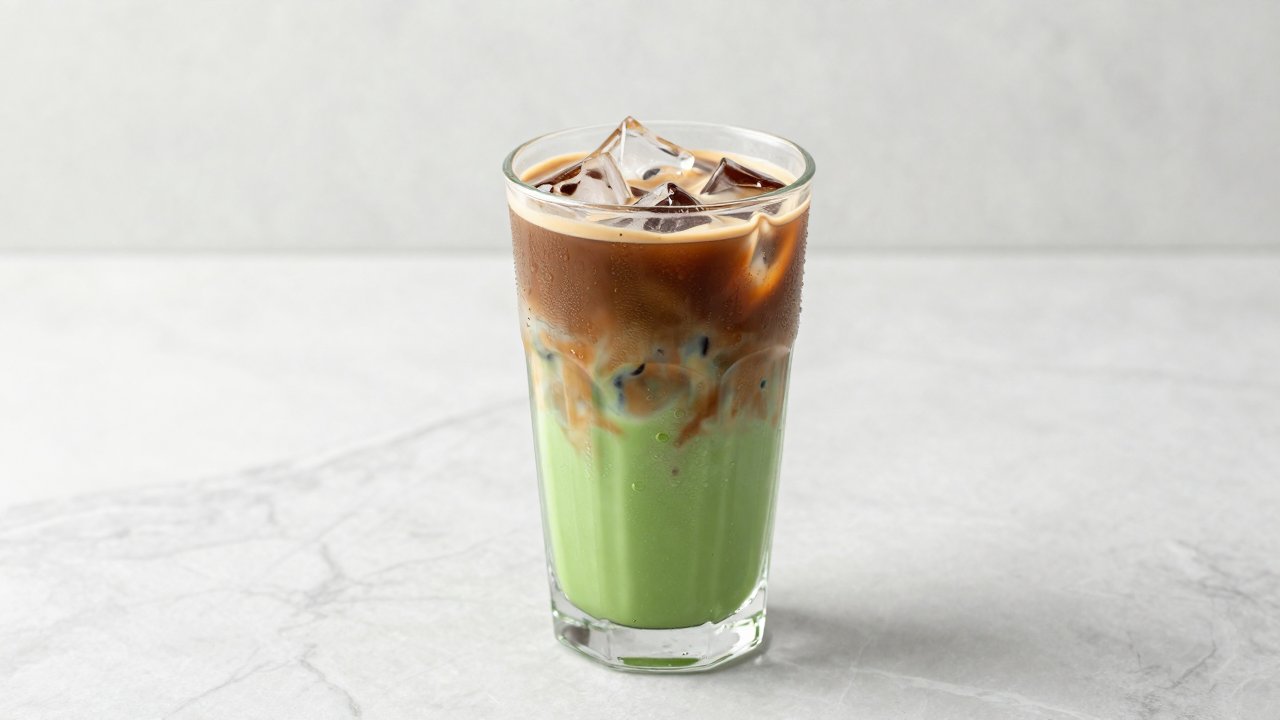
A Spanish latte pours espresso over milk, ice and a base of sweetened condensed milk, so the glass shows layers. Nobody knows who invented it, and Perfect Daily Grind describes it as a lighter cousin of Vietnamese iced coffee. It is a menu staple in Saudi Arabia, and a Dubai-based coffee professional estimated it makes up about half of sales in UAE coffee shops, while noting there are no official figures. The same article traces the closest relative to Spain's café bombón: one shot of espresso over a layer of condensed milk, served in a small glass so you can see both colors. Order the bombón if you want it short and strong, the Spanish latte if you want it tall and cold.
Vietnamese egg coffee: a sweet custard on top
Egg coffee whips egg yolk, sugar and condensed milk into a thick foam and spoons it over strong coffee.
According to Vietcetera, Nguyen Van Giang created the drink in 1946 while working at the Metropole hotel in Hanoi, during a milk shortage in the First Indochina War. Guests liked it enough that he left the hotel and opened Cafe Giang in the Old Quarter, which his son Nguyen Van Do runs today. The coffee drips through a Vietnamese phin filter, the whisked yolk mixture goes on top, and the cup often sits in a bowl of hot water to keep it warm. Giang's exact recipe is still a family secret. The foam should taste like sweet custard, not egg.
Ube latte: purple yam from the Philippines
Ube tastes sweet, nutty and vanilla-like, and it colors a latte bright purple without any dye.
Ube is a purple yam native to the Philippines and a staple of Filipino desserts. It is a different plant from taro and from purple sweet potato, and its name means "tuber" in Tagalog. In a November 2025 Perfect Daily Grind report, flavor company T. Hasegawa named it its 2024 Flavor of the Year, and the research firm Datassential projected 48% growth for ube on US menus from 2024 through 2027. The purple comes from anthocyanins, the same pigments in blueberries. Try it iced, since the color shows best in a clear cup and the flavor holds up under cold foam.
Black sesame and grain lattes from Korea
Korean cafés lean nutty and toasted, with lattes built on ground seeds and roasted grain.
A black sesame latte blends ground black sesame with milk and a little honey, and it comes out thick, gray and nutty with a smoky depth. A misugaru latte uses a powder of roasted grains such as barley, brown rice and sesame, mixed with milk and honey, for a nutty, lightly sweet and earthy cup, according to Slurrp's guide to Korean lattes. Both are often made with no coffee at all. Ask for a shot of espresso on top and you get a coffee drink that tastes like toasted nuts and cereal.
Café de olla: Mexico's cinnamon pot coffee
Café de olla simmers coffee with cinnamon and piloncillo, an unrefined cane sugar, for a warm, spiced cup.
The name means "pot coffee." Cooks simmer ground coffee with cinnamon and piloncillo, sometimes adding orange peel, anise or cloves, and the drink is traditionally made and served in earthenware, as Wikipedia's entry describes. The traditional version has no milk, so it is not a latte. Steam milk into it, or ask a café to add cinnamon and piloncillo to a latte, and you get the same spice in a creamier drink.
Gahwa: cardamom and saffron from the Gulf
Gulf coffee is roasted light, brewed gold, and perfumed with cardamom and often saffron.
Arabic coffee, called qahwa or gahwa, is brewed in a long-spouted pot called a dallah and poured into small, handleless cups called finjan, usually with dates on the side. Cardamom is the core spice, and coffee in the Gulf states often adds saffron, which together give the drink a yellow color, per Wikipedia's overview. In 2015, UNESCO added Arabic coffee to its list of intangible cultural heritage. Gahwa has no milk. The cardamom latte you see on café menus borrows its spice.
Café Touba: Senegal's peppery coffee
Café Touba gets a spicy, bitter, slightly smoky edge from grains of Selim, a West African pepper.
The drink takes its name from the city of Touba. The story, told as legend, credits the Sufi leader Cheikh Ahmadou Bamba, who founded Touba in 1887, with using it to keep followers alert during night-long chanting. According to Atlas Obscura, vendors roast and grind the beans with djar, the dried pods of the Xylopia aethiopica plant, plus cloves. They pour boiling water through the grounds several times, froth the coffee by pouring it between two cups, and sweeten it heavily. It has no milk. Street kiosks called tangana sell it for a few cents a cup.
Rate every new flavor you try
Log the latte in Jittr, score it out of ten and tag what you taste. After a few, you will see whether you keep coming back to sweet, nutty, floral or spiced.
Download Jittr