jittr
jittr
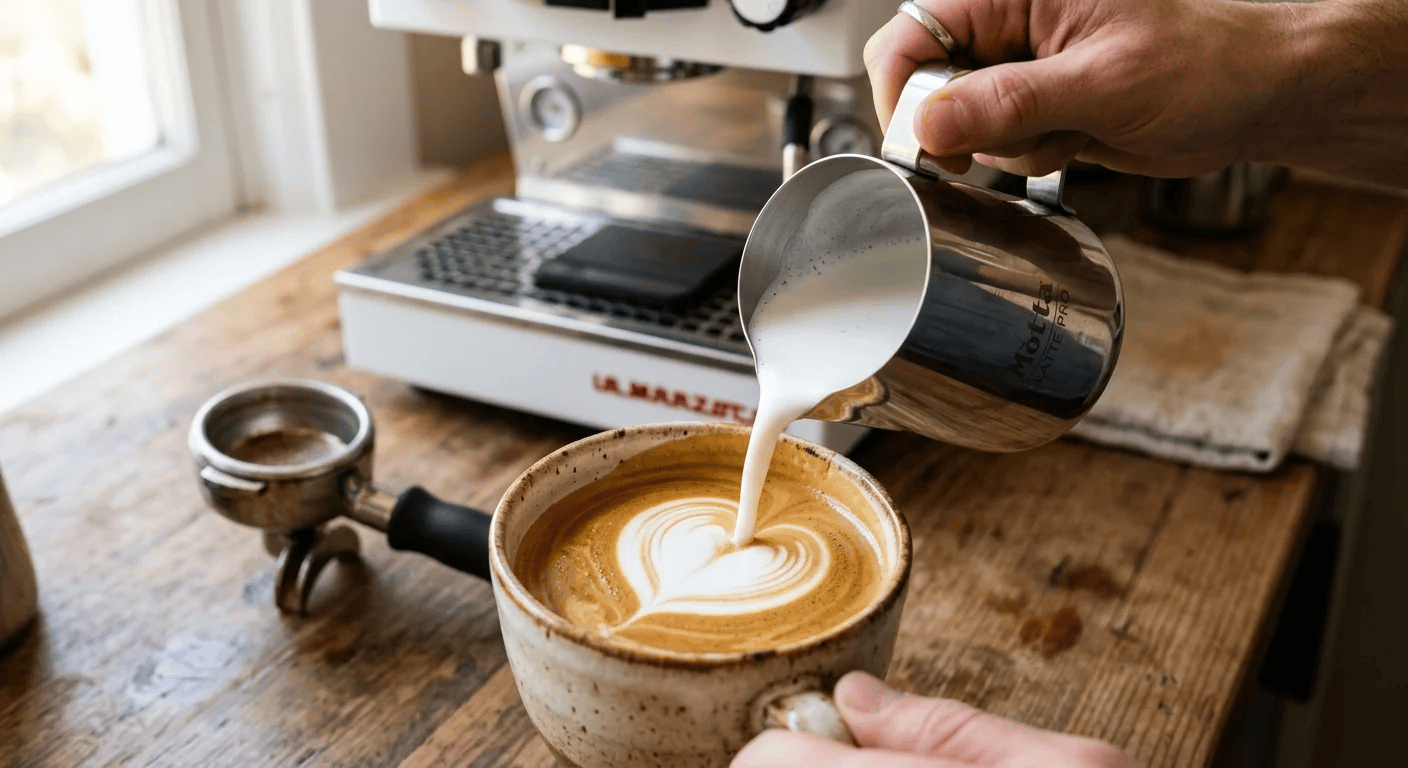
A latte is a shot or two of espresso topped with steamed milk and a thin layer of foam. Milk makes up most of the cup, so the two things that decide whether a latte is good are the shot and the milk temperature.
The shot
The Specialty Coffee Association's heritage definition of espresso calls for 7 to 9 grams of coffee per single shot, water forced through at 9 to 10 atmospheres for 20 to 30 seconds, and 25 to 35 ml in the cup. Cafés vary the dose, but the timing gives you something to watch. A shot that gushes out in ten seconds or drips for a minute is off, and milk won't fix it.
If you can, order a straight espresso at a new café before you order the latte. If you wouldn't drink the shot on its own, you won't like it under milk.
The milk
Steaming adds air and heat. Researchers at the University of Camerino, studying milk for cappuccino, cite about 60°C (140°F) as the optimum and recommend keeping milk under 70°C (158°F), since hotter milk can develop a cooked flavor. Their tests also found that riboflavin and niacin levels dropped as temperature rose.
A latte at the right temperature is warm enough to sip right away. If you have to wait five minutes, the milk went too hot. Ask for it "not extra hot" if a café tends to scald it.
Latte art
A rosetta or tulip shows that the barista textured the milk into microfoam and poured with control. It says nothing about the espresso. Taste before you add sugar, since sugar covers a sour or bitter shot.
Finding good lattes nearby
Star ratings on map apps make a poor guide. A café's average covers every drink and every complaint about parking, and online ratings bunch at the top: a 2009 analysis in Communications of the ACM found 78% of Amazon book ratings were four stars or higher. A café with a 4.6 tells you little about its latte.
Look for ratings tied to the drink you plan to order, check how many ratings sit behind the score, and favor recent ones. Baristas leave, cafés change roasters, and a rating from two years ago may describe a different drink.
Keep your own list
When you travel, a short list of reliable lattes per city saves you a bad first morning. Keep it in one place and score each latte as you finish it, so your list reflects the drink and not your mood an hour later.
Find the best-rated lattes near you
Jittr's Discover screen filters by drink and flavor, and its rankings weight recent ratings, so you see the lattes people are scoring now.
Download Jittr