jittr

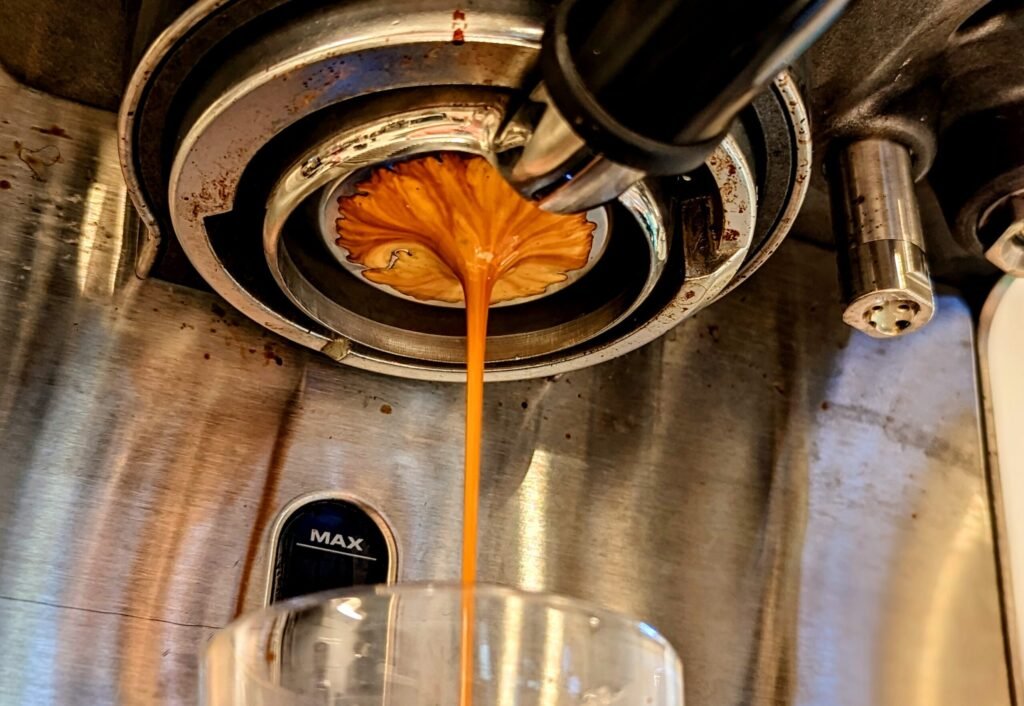
Caffeine numbers for coffee come as ranges because the bean, the dose and the brew all change them. The figures below come from Mayo Clinic, the FDA and laboratory studies.
Reference amounts
Mayo Clinic's caffeine chart lists:
- Brewed coffee, 8 oz: 96 mg
- Espresso, 1 oz: 63 mg
- Instant coffee, 8 oz: 62 mg
The FDA gives 113 to 247 mg for a 12-ounce cup of brewed coffee and 2 to 15 mg for an 8-ounce cup of decaf.
The same order can vary by double
In a 2003 study in the Journal of Analytical Toxicology, University of Florida researchers bought 16-ounce cups of regular coffee from several chains. Starbucks had the most caffeine at 259 mg and Dunkin' the least at 143 mg. Then they bought a 16-ounce Starbucks Breakfast Blend from the same store on six consecutive days and measured 564, 498, 259, 303, 300 and 307 mg. Espresso servings from 40 to 170 ml held 58 to 185 mg.
A posted caffeine number is an estimate. The beans in the hopper, the grind and the barista's dose all move it.
Cold brew
Thomas Jefferson University chemists Niny Rao and Megan Fuller compared cold and hot brew in 2017. Using a coarse grind, cold brew held much more caffeine than hot brew made from the same coffee. Caffeine extraction reached equilibrium between 6 and 7 hours, well short of the 10 to 24 hours most recipes call for, and a medium roast gave more caffeine than a dark roast.
Cafés make cold brew as a concentrate and cut it with water or ice, so the caffeine in your glass depends on that dilution.
Milk drinks
The caffeine in a latte, cappuccino, flat white or macchiato comes from the espresso shots. The milk adds volume but no caffeine, so two drinks with the same number of shots carry about the same caffeine whatever the cup size. Ask how many shots go in each size. A third shot adds about another 63 mg by Mayo's per-ounce figure.
Roast and species
Dark roast tastes stronger but doesn't carry more caffeine. In the Jefferson study, the medium roast came out ahead of the dark roast.
Species matters too. A 2001 study in Food Chemistry of wild coffee plants found that Coffea canephora, sold as robusta, carried more caffeine than Coffea arabica. Most specialty coffee is arabica. Some commercial and espresso blends include robusta, so ask if you're watching your intake.
The 400 mg guideline
The FDA cites 400 mg a day, about two to three 12-ounce cups of brewed coffee, as an amount "not generally associated with negative effects" for most adults. It asks people who are pregnant, trying to become pregnant or breastfeeding to check with a health care provider, and notes that some medications make people more sensitive to caffeine.
Timing matters for sleep. In a 2013 study in the Journal of Clinical Sleep Medicine, 400 mg of caffeine taken six hours before bed cut total sleep by more than an hour on an in-home monitor, and the participants didn't notice the loss.
Keep a record of what you drink
Tag each drink in Jittr with its size and caffeine, and your history doubles as a running caffeine log.
Download Jittr