jittr

Coffee, yerba mate and matcha all wake you up with caffeine, and they reach it from three different plants. Coffee comes from a roasted seed, mate from the dried leaves of a South American holly, and matcha from shaded Japanese tea leaves ground into powder. A cup of each lands closer on caffeine than most people expect. The bigger differences are in taste, in what else is in the cup, and in how you make it. The tool below compares the caffeine and suggests one for your morning. The sections after it explain each difference.
coffee, mate or matcha
Tell it what you want from the cup and how much time you have.
- Coffee: 80 to 100 mg of caffeine in an 8-ounce cup
- Yerba mate: about 80 mg in a 150 ml cup, and a refilled gourd can pass 260 mg
- Matcha: about 38 to 89 mg in a 2-gram serving
Caffeine: closer than you think
Cup for cup, the three sit in the same range. The real spread comes from how much you drink and how you brew.
The FDA puts an 8-ounce cup of coffee at 80 to 100 mg of caffeine. For mate, a 2021 review in Nutrients by Gawron-Gzella and colleagues puts a 150 ml cup near 80 mg, "comparable to that in a cup of coffee." Mate drinkers refill the same leaves again and again, and the review notes a full session can deliver more than 260 mg. Cold-brewed mate, called tereré, carried about 2.5 times the caffeine per 100 ml of the hot version in one study it cites. For matcha, a 2021 review in Molecules found 18.9 to 44.4 mg of caffeine per gram of powder. A typical 2-gram serving works out to roughly 38 to 89 mg. That math is ours, from the review's range. The FDA's guideline for healthy adults is 400 mg a day across everything you drink.
What else is in the cup
Matcha brings L-theanine along with its caffeine, and mate brings theobromine.
Matcha growers shade the tea bushes before harvest, and the Molecules review explains that shading raises the leaves' levels of theanine, caffeine and chlorophyll. L-theanine is an amino acid that one study in the review measured at up to 44.65 mg per gram of matcha. You drink the whole ground leaf, so you get all of it. Mate contains theobromine, the mild stimulant in chocolate, at 6 to 28 mg per gram of dry leaf according to the Nutrients review. Many matcha drinkers describe a steadier lift than coffee gives. That comes from people's experience and from studies of L-theanine itself. I could not find a trial that tested it with cups of matcha.
Taste: roasted, grassy and smoky, or umami
Coffee tastes like its roast, mate tastes bitter and smoky-green, and matcha tastes savory and vegetal.
Coffee's flavor depends on origin and roast: fruit and acidity in light roasts, chocolate and char in dark ones. Mate gets its bitterness from its caffeine and theobromine, and producers roast the fresh leaves over fire for seconds to a few minutes, which the Nutrients review links to mate's sweet, smoky flavor and brown color. Some producers then age the leaves for 12 months or more. Matcha leans savory. Shading builds the compounds behind umami, the brothy taste in seaweed and miso, according to a 2024 study in Foods, while sun-grown teas taste more bitter. Good matcha should taste sweet-grassy with a mild bitter finish, not harsh.
How you make each one
Coffee has a dozen methods, mate is a ritual of refills, and matcha takes a whisk and a minute.
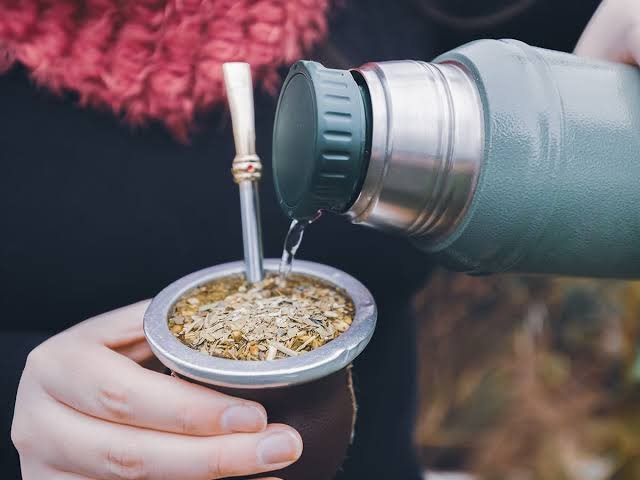
Coffee brews by drip, pour-over, French press, espresso or cold brew, and each changes the cup. Mate has its own method: fill a gourd about a quarter full with dried leaves, add water around 65 to 80 °C to about two-thirds, wait a few minutes, and sip through a metal straw with a filter at the end, called a bombilla. The Nutrients review says the same leaves can take six or seven refills. In Argentina, Uruguay and Paraguay, one gourd often passes around a group. Matcha is the fastest of the three. Sift about 2 grams of powder into a bowl, add a little hot water below boiling, and whisk until it foams. Add more water for a thinner drink, or pour it over milk for a latte.
Rate all three
Try a cup of each this week and log them in Jittr with a score and the flavors you taste. Your ratings show which one you reach for when you are not just chasing caffeine.
Download Jittr